Did I watch that already?

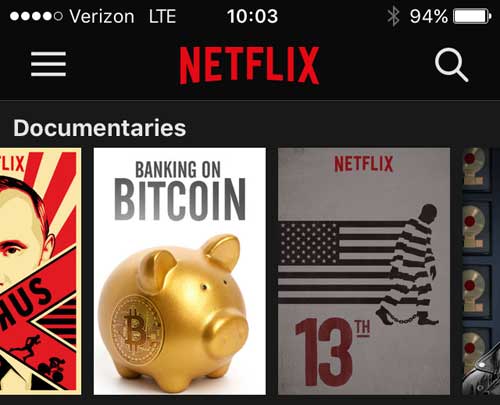
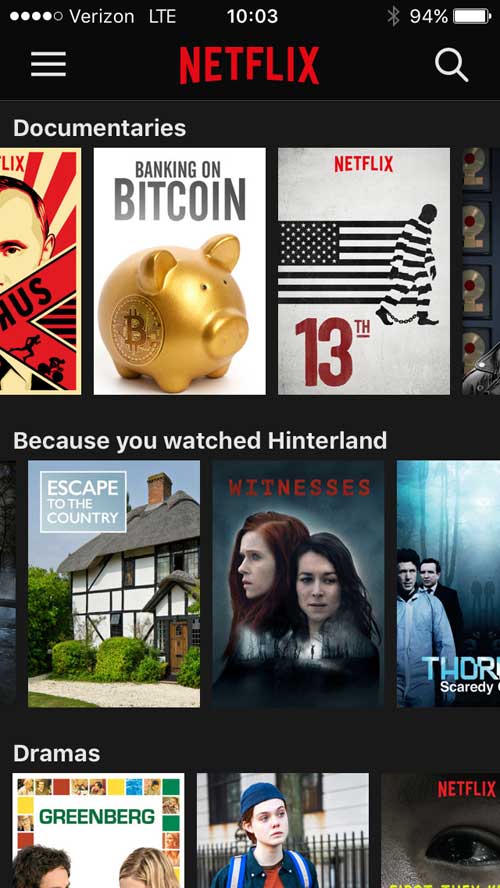
I use the Netflix iOS a lot. I’ve watch a lot of stuff and need to find new videos to watch. This app doesn’t facilitate that user task very well.

Screen shot of the Netflix iOS movie selection pattern
Screen shot: Selection page in the Netflix iOS app

Design Suggestions

  1. Make it obvious which videos you’ve watched already. Lower the opacity for watched items.
Screen shot of movie tiles with the watched movie grayed out
I’ve watched 13th
  • On the screen for a specific video, give an indication if you’ve watched it already. Lower the opacity of the title image and change “Play” to “Watch Again”.
  • Video page where the play button now reads watch again
    Watch again
  • In settings, add an option to filter out anything you’ve watched. You can still search.
  • Screen shot of the app settings with a toggle switch to remove watched videos from suggestions
    Remove from Suggestions in App Settings
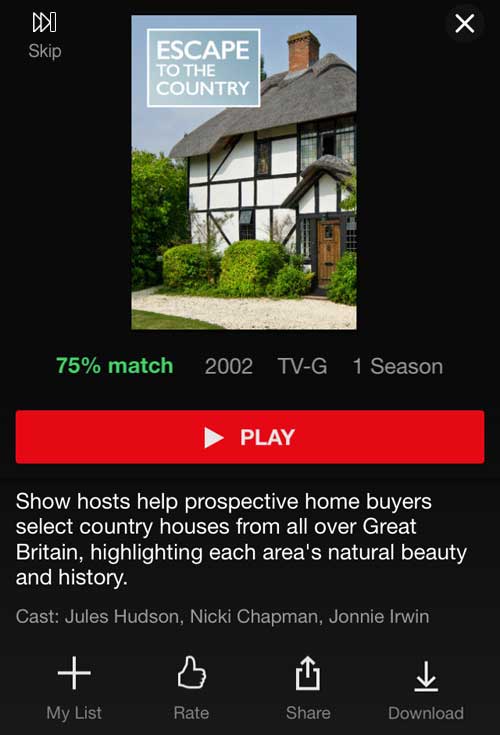
  • Provide a way to mark videos you don’t want to watch so they stop showing up as suggestions. I’ve added a “Skip” icon as an example. Icons are always hard. My first attempt was a “not interested” button but it was too prominent. I think employing the same design as other icons and putting it in line with the “close” icon gives it subtlety and context.

  • Video page with a skip icon and text in the upper left
    Skip option to hide videos

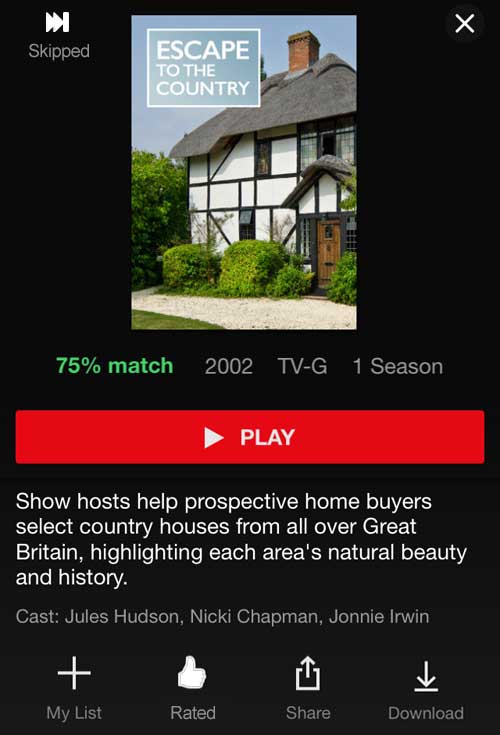
    Once you’ve rated a video, the thumbs up icon turns white and the text “Rate” turned to “Rated”. I’ve followed that pattern with the “Skip” button, filling in the control and changing it to “Skipped”. Tapping this would allow this title to become a suggestion again.

    Video page with the Skipped icon and text in the upper left
    Skipped icon

    Then test it!

    Fitbit Dashboard Changes are a Win

    Last week, the Fitbit iOS app introduced an updated dashboard that more closely matches the UI of the desktop site. For reference, this is what the dashboard looked like for years.
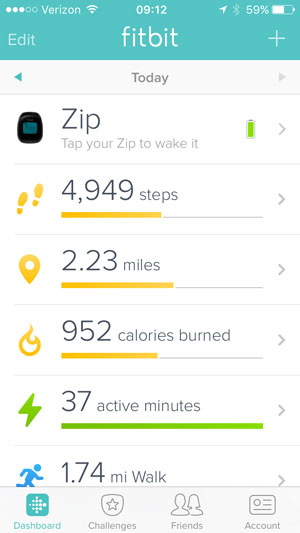
    fitbit dashboard with stats like steps and miles listed vertically

    Stats are now tiles

    The dashboard moved away from a vertical listing of stats to a more friendly tile layout, which allows more information to be displayed at the same time on a small screen. Tapping a tile still takes you to a weekly snapshot of the data point.
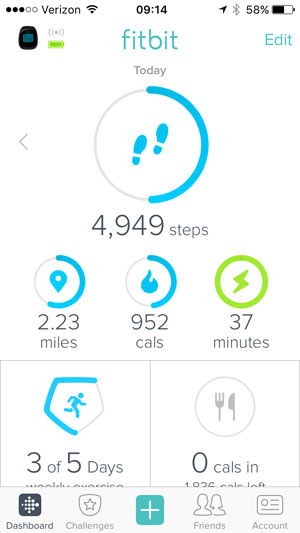
    fitbit dashboard stats like steps and miles represented as tiles

    Add, remove, move tiles like iOS

    After tapping the ‘Edit’ button, you can remove tiles (or add them back) and update the layout by holding and dragging tiles between spots. You can choose between four stats—steps, calories, miles, and exercise minutes—as the main data point displayed in the largest tile at the top.
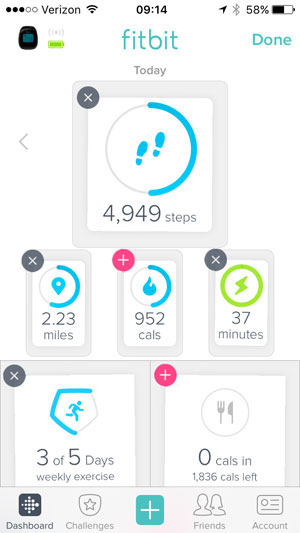
    fitbit dashboard edit screen with small x icons to remove stats tiles

    After tapping the ‘Done’ button, you see the updated dashboard with only the tiles you’ve selected. I’ve chosen to remove both calorie tiles.
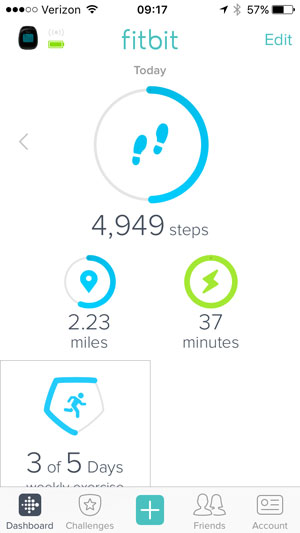
    fitbit dashboard showing only steps, miles, minutes, and days of exercise

    Pull to sync your device

    Fitbit now employs the ‘pull to update’ pattern to sync your device with your iPhone, which is by far my favorite improvement. This is an easy, one-step process whereas before you had to tap to the sync screen then tap to sync.
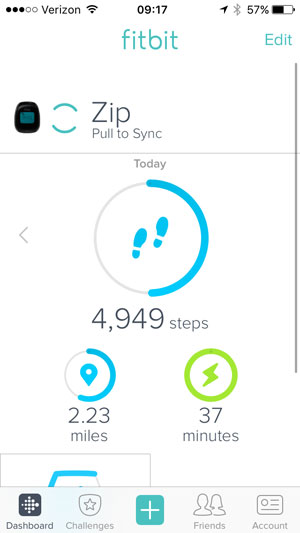
    fitbit pull to sync on the dashboard screen

    Goal statuses

    The dashboard still uses green to indicate a daily goal has been met, but it made two other changes:

    1. It now uses a blue color instead of orange to show a goal in progress
    2. It uses a circle instead of a bar to indicate progress

    I like both these changes. The orange always looks a bit like a warning and wasn’t very inviting. The circle gives a clearer indication that you’re reaching the end of something.
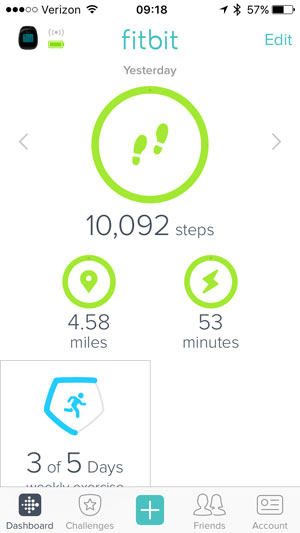
    fitbit dashboards showing full circles to represented completed goals

    Final thoughts

    I like these updates a lot and they have improved my experience using the app. I hope one of the next updates is separating out the ‘track exercise’ and ‘log exercise’ features. While the ‘add’ button was made more visible by making it part of the app navigation at the bottom of the screen, it still does not provide ‘log exercise’ as its own option even though there is plenty of room.
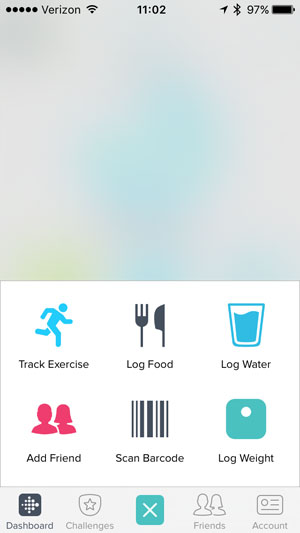
    fitbit 'add' screen with options like track exercise and log food

    Fitbit Exercise Tracking is Confusing

    I’ve had a Fitbit Zip for almost three years and I use the iOS app to sync the data from it. This app lets you track exercise that wasn’t captured in full by the step counter. I use this to add info about weight training and aerobics at the gym.

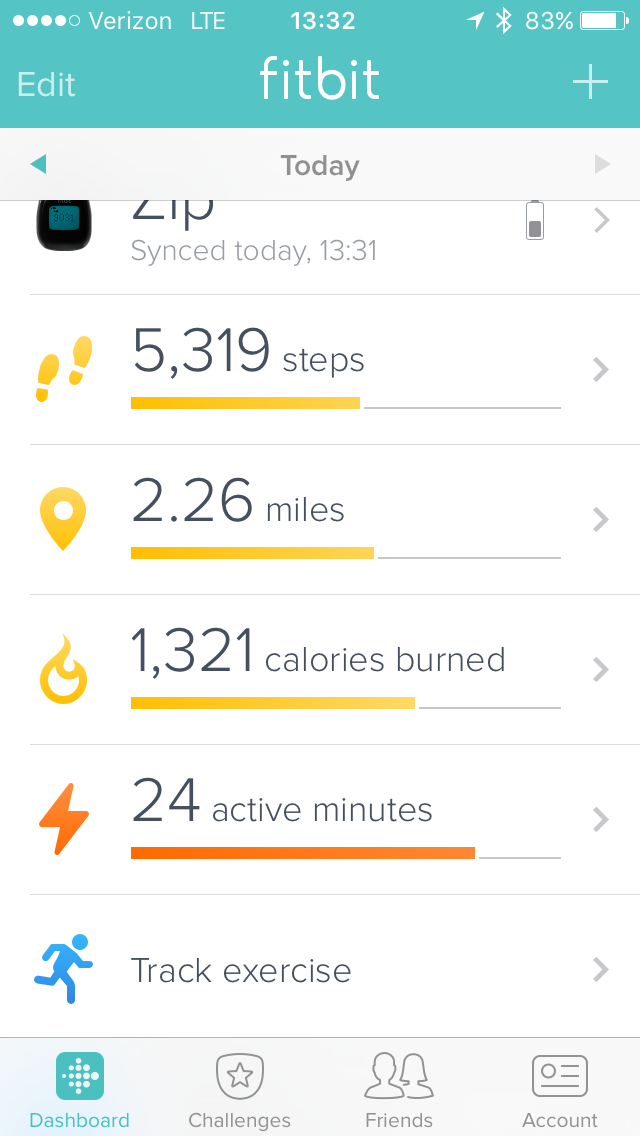
    The active minutes, steps, and distance often do not add up when I add one of these exercises manually. The other day, I took a moderate 1 mile walk but forgot to start the tracking feature in the app. After my walk, this is what my activity looked like.

    screenshot of fitbit app showing 24 minutes of activity, 5319 steps, 2.26 miles
    Fitbit activity before logging exercise

    My stats showed

    • 5,319 steps
    • 2.26 miles
    • 24 active minutes

    After I added in my walk manually, the stats updated in an unexpected way.

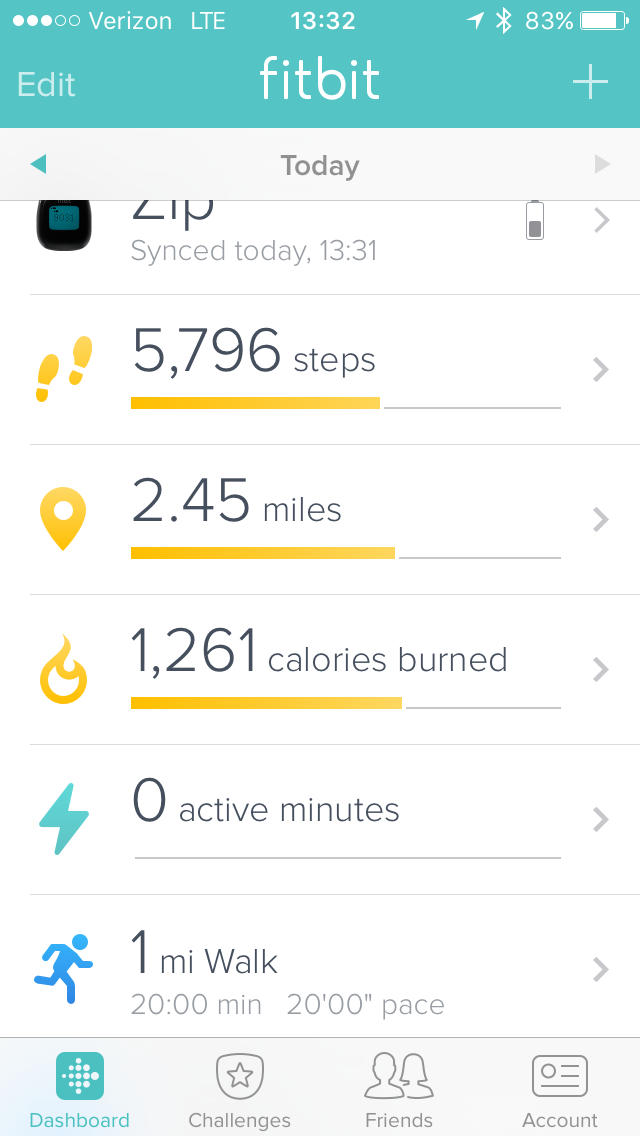
    screenshot of the Fitbit app showing 5,796 steps, 2.45 miles and 0 active minutes
    Fitbit activity after adding a walk

    My stats changed to

    • 5,796 steps
    • 2.45 miles
    • 0 active minutes

    What? I can’t figure out what Fitbit is trying to do when I log exercise manually. The distance and steps shouldn’t change when those are precisely what the tracker tracks. My active minutes dropping to 0 is what I find most perplexing. How would adding exercise ever reduce active minutes?

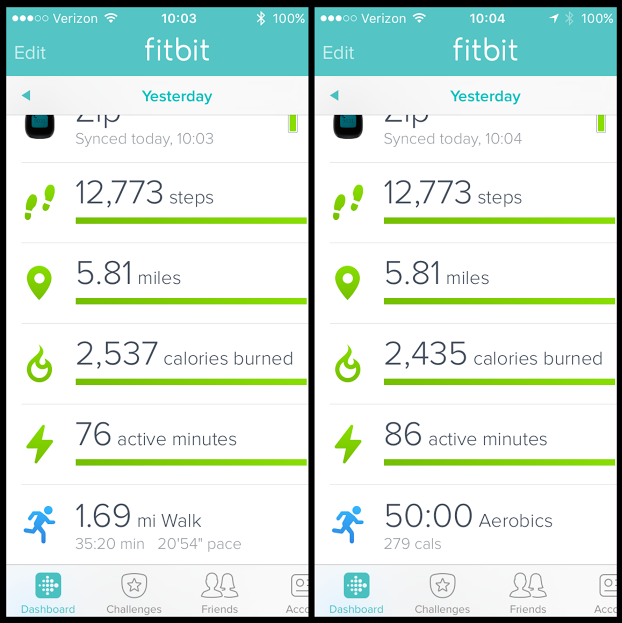
    By way of comparison, here are my stats from yesterday before and after manually logging 50 minutes of aerobics.

    side by side screenshots showing discrepancies between calories and active minutes
    Fitbit comparison when logging aerobics

    Here we see the number of calories burned dropped by 102 while active minutes increased by 10. Again, what? I wasn’t able to find any information from Fitbit about how its software calculates these numbers but I think it’s safe to say, something doesn’t add up.